Sunday, 4 January 2026

Fallacious discrete thinking

On the tenth day of Antonym Christmas, the Internet gave to me: 

fallacious discrete thinking


Mark Liberman at Language Log coined the term grouping-think for the tendency to create dichotomous categories where really they aren't so dichotomous. Liberman discusses it with reference to a study on psychopathy with a graph like this:
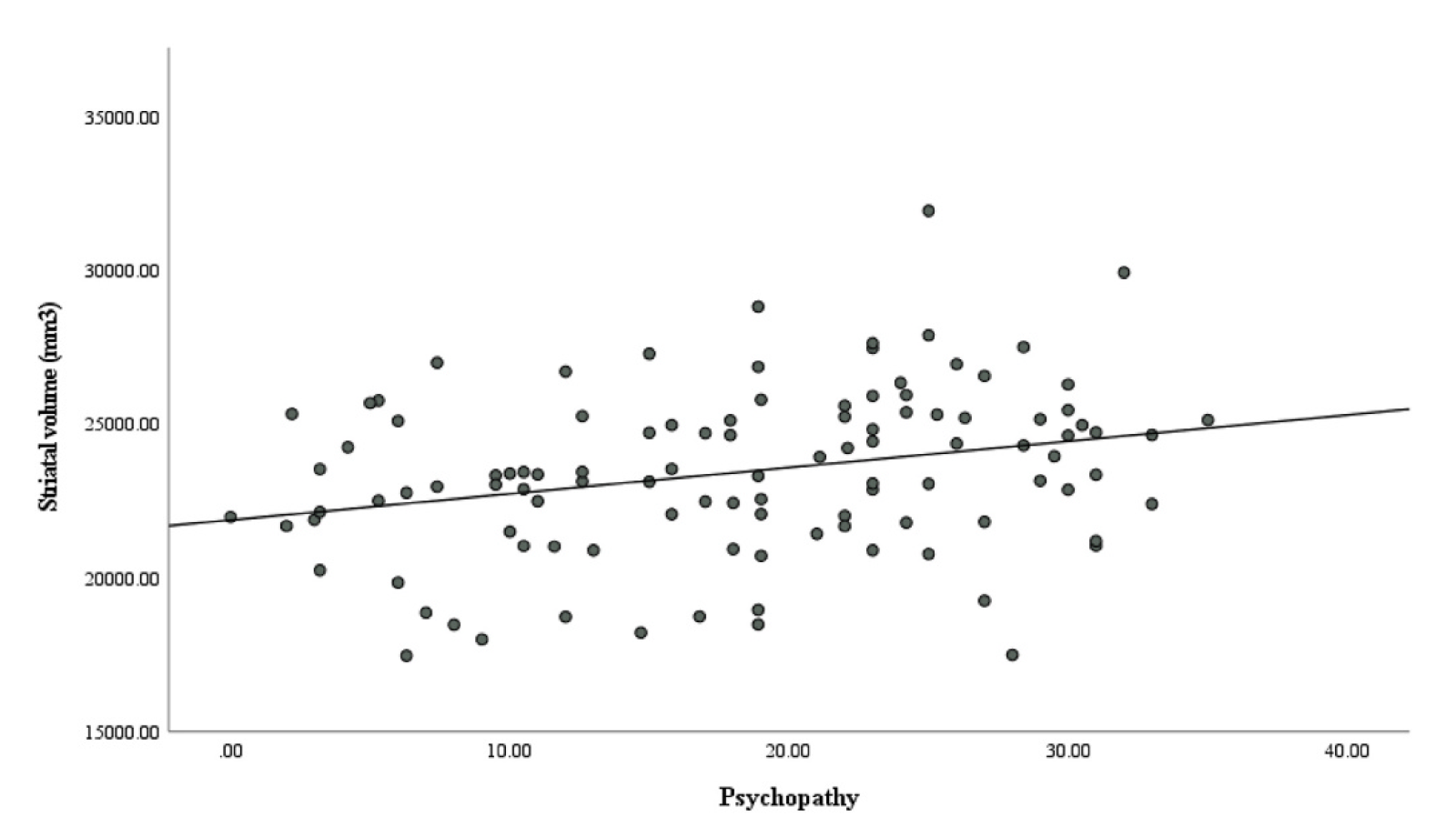
About it, Liberman writes:

So that press release and its mass-media uptake exemplify a cluster of fallacies that needs a name, and (as far as I know) doesn't have one. The key pieces:

  1. Thinking of distributions as points;
  2. Inventing convenient but unreal taxonomic categories;
  3. Forming stereotypes, especially via confirmation bias.


It is a statistical take on the fallacy of the excluded middle. Andrew Gelman calls it "discrete thinking" and epidemiologist Sander Greenland calls it dichotomania "the compulsion to replace quantities with dichotomies (‘black-and-white thinking’), even when such dichotomization is unnecessary and misleading for inference.”

Liberman has also shared his slides for a talk about mis-use of generic plurals (e.g. psychopaths are ...), related to this post. 

Friday, 2 January 2026

Chinese Janus sentences

  On the ninth day of Antonym Christmas, the Internet gave to me: 

Chinese Janus sentences


I'm learning Mandarin at the moment, and it is full of homonyms, which made me suspect that it would be full of contronyms, aka Janus words, aka auto-antonyms. When I tried looking up 'Chinese contronyms', I found more than Janus words; I found that Victor Mair at Language Log had written about Janus sentences. 

Here are two Chinese sentences that seriously mess with your mind, since they can also mean the opposite of what they seem to say:

I.

Dōngtiān: néng chuān duōshǎo chuān duōshǎo; xiàtiān: néng chuān duō shǎo chuān duō shǎo.

冬天:能穿多少穿多少;夏天:能穿多少穿多少。

Winter:  wear as much as possible; summer:  wear as little as possible.

II.

Shèngnǚ chǎnshēng de yuányīn yǒu liǎng gè: yī shì shéi dōu kàn bù shàng, èr shì shéi dōu kàn bù shàng.

剩女产生的原因有两个:一是谁都看不上,二是谁都看不上。

Reasons why there are shèngnǚ 剩女 ("unmarried / left behind women; spinsters")*:

1. they look down on everybody
(i.e., they can't stand the sight of anybody; they despise / dislike everybody; they are dissatisfied with everybody; they are not attracted to anyone)

2. everybody looks down on them
(i.e., nobody can stand the sight of them; everybody despises / dislikes them; everybody is dissatisfied with them; nobody is attracted to them)

Do see Mair's original post for more explanation.

I also like this in the Wikipedia article about Homophonic Puns in Standard Chinese:

  • Dream of the Red Chamber – Similar to Dickens or Dostoevsky, Cao Xueqin chose many of the names of his characters in Dream of the Red Chamber to be homophones with other words which hint at their qualities. For example, the name of the main family, "賈" (Jiǎ) puns with "假" meaning "fake" or "false" while the name of the other main family in the story, "甄" (Zhēn) puns with "真" meaning "real" or "true".


Thursday, 1 January 2026

Yesbody

   On the eighth day of Antonym Christmas, the Internet gave to me: 

the opposite of nobody


Arnold Zwicky, on his blog, linguistically and logically takes apart this One Big Happy comic strip:


He does it so well that there's no point in me analy{s/z}ing it here! So please, read his post.


It reminds me of: one day when Grover was very small, she kept asking me "When is yeswember?" It took me a while before I realized she'd heard the word November and was puzzling it out. 

Wednesday, 31 December 2025

Tuesday, 30 December 2025

Inappropriate and in...

On the sixth day of Antonym Christmas, the Internet gave to me:

Morphological negative concord


Mark Liberman at Language Log noticed that an awful lot of people type "inappropriate and inoffensive" when they clearly mean inappropriate and offensive"?  Why is it because we want a negative prefix on what is clearly a negative-feeling word?  (Click on the link for his examples.)

Monday, 29 December 2025

Plutchik's Wheel of Emotions

On the fifth day of Antonym Christmas, the Internet gave to me:
Big feeling wheel!


Rather than alt-texting this complex diagram, I'll encourage you to click on the caption and read the webpage it came from.
Read more about this diagram here.


Goodness, it took me a long time to find a version of this diagram online that spelled ecstasy correctly.

Anyhow, I like thinking about the oppositions here: trust is the opposite of disgust;  annoyance is the opposite of apprehension; serenity is the opposite of pensiveness. Love is the opposite of remorse.


Sunday, 28 December 2025

Not a cat (Blackadder)

On the fourth day of Antonym Christmas, the Internet gave to me: 

a definition starting with D


Blackadder 3.2:  Ink and Incapability

Baldrick's definition of cat: 'not a dog'. 

I particularly like this because my first book has an argument for cat/dog being antonyms (or opposites, depending on your definition of antonym):


For Deese (1965) and many since, antonymy is only indicated if two contrasting items reciprocally trigger each other in word-association tasks. When asked the opposite of peanut butter, American English speakers are likely to say jelly, but when asked the opposite of jelly, they might well say jam. Compare the pair cat/dog, which seems more properly antonymous (in the inclusive sense of the word). While they are each part of a larger contrast set that offers many other potential antonyms, they often co-occur in varying contexts and our conceptual knowledge about their referents allows for a ‘minimal difference’ interpretation under RC-LC. Unlike for gin and tonic, both cat(s) and dog(s) and dog(s) and cat(s) occur regularly in the British National Corpus (forty-two and fifty-six occurrences, respectively). The words also co-occur in a variety of set phrases, as in (3).  (3) raining cats and dogs        fight like cats and dogs        cats and dogs or dogs and cats (= ‘speculative securities’)  And they are replaceable in other phrases and compounds: (4) a cat/dog person dog/cat food The juxtaposition of cat/dog in both fixed expressions and creative language use encourages us to view them as a stored canonical pair rather than as a lexicalized conventional phrase. The fact that the two can be deemed ‘minimally different,’ based on what we know about cats and dogs, encourages us to view them as canonical opposites. They are different in that they have incompatible reference, but similar in that they are basic-level terms for four-legged, furry animals that are commonly kept as house pets and that are tame enough and of an appropriate size to remain uncaged and interact with people. These similarities are what makes dog the more usual opposite for cat than mouse (which differs in size, tameness, pet status), even though cat-mouse are experientially reinforced through their own set of expressions (play cat and mouse with; when the cat’s away, the mouse will play).


Murphy ML. 2003. Semantic Relations and the Lexicon: Antonymy, Synonymy and Other Paradigms. Cambridge University Press.