Tuesday, 6 January 2026

Iain McGilchrist: The Coincidence of Opposites

 On the twelfth day of Antonym Christmas, the Internet gave to me: 

a lecture on opposites and meaning in life


Based on a chapter Oxford University psychiatrist Iain McGilchrist's book The Matter with Things.

"We fail to understand anymore that things and their opposites are not as irreconcilable and as far apart from one another as they may seem"

Now, the video above is from a strange college in the US, and it's a 2-hour thing. I put it there just to have a video embedded here. But I've watched the unembeddable one here from the Fintry Trust. 

It includes a lot of philosophical and literary references to the complementarity of opposites, some of which have appeared on this blog before, and some of which will show up here again when I re-discover them. 

Monday, 5 January 2026

Semantris

 On the eleventh day of Antonym Christmas, the Internet gave to me: 

a stupidly addictive game


When new word game apps, like Wordle and Spelling Bee, came out, I was so grateful for their once-a-day rationing. You see, I used to have an addiction to Tetris, and I would go the same way if there had been unlimited Spelling Bee. (There probably is—please don't point me toward it.)

But then Google research, in a clever way to get me hooked on an AI bot, released its Semantris games, which combines word association (antonyms are very useful here) with Tetris.  (I play the untimed Block version.)  I have lost my Christmas holidays to it. You have been warned.


Here's the link to play, if you dare.


Sunday, 4 January 2026

Fallacious discrete thinking

On the tenth day of Antonym Christmas, the Internet gave to me: 

fallacious discrete thinking


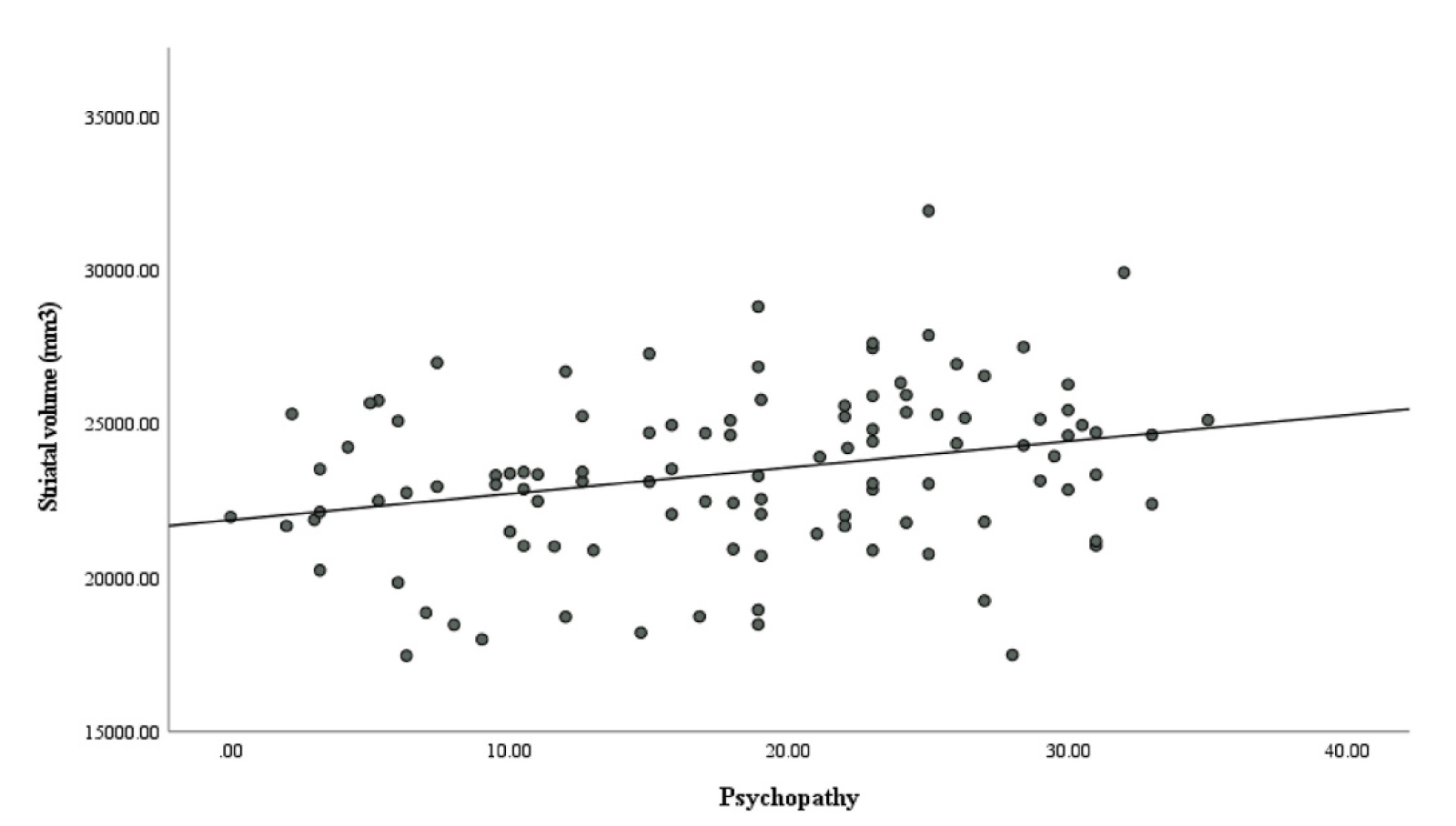
Mark Liberman at Language Log coined the term grouping-think for the tendency to create dichotomous categories where really they aren't so dichotomous. Liberman discusses it with reference to a study on psychopathy with a graph like this:

About it, Liberman writes:

So that press release and its mass-media uptake exemplify a cluster of fallacies that needs a name, and (as far as I know) doesn't have one. The key pieces:

  1. Thinking of distributions as points;
  2. Inventing convenient but unreal taxonomic categories;
  3. Forming stereotypes, especially via confirmation bias.


It is a statistical take on the fallacy of the excluded middle. Andrew Gelman calls it "discrete thinking" and epidemiologist Sander Greenland calls it dichotomania "the compulsion to replace quantities with dichotomies (‘black-and-white thinking’), even when such dichotomization is unnecessary and misleading for inference.”

Liberman has also shared his slides for a talk about mis-use of generic plurals (e.g. psychopaths are ...), related to this post. 

Friday, 2 January 2026

Chinese Janus sentences

  On the ninth day of Antonym Christmas, the Internet gave to me: 

Chinese Janus sentences


I'm learning Mandarin at the moment, and it is full of homonyms, which made me suspect that it would be full of contronyms, aka Janus words, aka auto-antonyms. When I tried looking up 'Chinese contronyms', I found more than Janus words; I found that Victor Mair at Language Log had written about Janus sentences

Here are two Chinese sentences that seriously mess with your mind, since they can also mean the opposite of what they seem to say:

I.

Dōngtiān: néng chuān duōshǎo chuān duōshǎo; xiàtiān: néng chuān duō shǎo chuān duō shǎo.

冬天:能穿多少穿多少;夏天:能穿多少穿多少。

Winter:  wear as much as possible; summer:  wear as little as possible.

II.

Shèngnǚ chǎnshēng de yuányīn yǒu liǎng gè: yī shì shéi dōu kàn bù shàng, èr shì shéi dōu kàn bù shàng.

剩女产生的原因有两个:一是谁都看不上,二是谁都看不上。

Reasons why there are shèngnǚ 剩女 ("unmarried / left behind women; spinsters")*:

1. they look down on everybody
(i.e., they can't stand the sight of anybody; they despise / dislike everybody; they are dissatisfied with everybody; they are not attracted to anyone)

2. everybody looks down on them
(i.e., nobody can stand the sight of them; everybody despises / dislikes them; everybody is dissatisfied with them; nobody is attracted to them)

Do see Mair's original post for more explanation.

I also like this in the Wikipedia article about Homophonic Puns in Standard Chinese:

  • Dream of the Red Chamber – Similar to Dickens or DostoevskyCao Xueqin chose many of the names of his characters in Dream of the Red Chamber to be homophones with other words which hint at their qualities. For example, the name of the main family, "賈" (Jiǎ) puns with "假" meaning "fake" or "false" while the name of the other main family in the story, "甄" (Zhēn) puns with "真" meaning "real" or "true".


Thursday, 1 January 2026

Yesbody

   On the eighth day of Antonym Christmas, the Internet gave to me: 

the opposite of nobody


Arnold Zwicky, on his blog, linguistically and logically takes apart this One Big Happy comic strip:


He does it so well that there's no point in me analy{s/z}ing it here! So please, read his post.


It reminds me of: one day when Grover was very small, she kept asking me "When is yeswember?" It took me a while before I realized she'd heard the word November and was puzzling it out. 

Wednesday, 31 December 2025

Tuesday, 30 December 2025

Inappropriate and in...

On the sixth day of Antonym Christmas, the Internet gave to me:

Morphological negative concord


Mark Liberman at Language Log noticed that an awful lot of people type "inappropriate and inoffensive" when they clearly mean inappropriate and offensive"?  Why is it because we want a negative prefix on what is clearly a negative-feeling word?  (Click on the link for his examples.)