Sunday, 18 January 2026

"Community is the opposite of patriarchy"

I enjoyed this comparison Sandra Bullock films v other cultural models from Celeste M. Davis's Matriarchal Blessing. 

Community is the opposite of patriarchy

That shiny, pretty pink fantasy of being swept off our feet and filled with love, acceptance, worth and belonging through romantic love is such a very alluring fantasy2, and yet more often than not, it can’t deliver.

Romantic love is not the villain, we’ve simply asked far too much of it. We have asked romance to replace mothers, cousins, shared childrearing, elders, neighbors, ritual, shared labor, friends, community and shared meaning.

It can’t do it, it’s too much.

The fragility of a woman's life and stability depending on a man is not incidental, it's a design feature of the nuclear, patriarchal system.

Community is the opposite of patriarchy. It does not make you earn belonging through your attractiveness or caretaking. It does not isolate women into romantic dependency. It does not parade the isolated islands of nuclear families as the pinnacle of achievement and success.  ...

(read the whole thing, it's great!) 

Wednesday, 7 January 2026

The Opposite of Cheating

I've done my 12 Days of Antonym Christmas, but I still have leftover links to share. So welcome to the 13th day of Christmas!


In the past, I've blogged about The Opposite of... book titles. They continue to be published, and I dont' have time to keep adding to that post, but in 2025 I actually read a The Opposite of ... book: The Opposite of Cheating

Book cover: The Opposite of Cheating by Tricia Bertram Gallant and David A. Rettinger

The opposite of cheating could be academic integrity or not cheating—but really, the authors argue, the opposite of cheating is learning.

I must admit, a lot of the book hasn't stayed in my brain, though I underlined a lot of things in it. Will have to review before the new semester. I would recommend, though, the authors' podcast by the same name

Tuesday, 6 January 2026

Iain McGilchrist: The Coincidence of Opposites

 On the twelfth day of Antonym Christmas, the Internet gave to me: 

a lecture on opposites and meaning in life


Based on a chapter Oxford University psychiatrist Iain McGilchrist's book The Matter with Things.

"We fail to understand anymore that things and their opposites are not as irreconcilable and as far apart from one another as they may seem"

Now, the video above is from a strange college in the US, and it's a 2-hour thing. I put it there just to have a video embedded here. But I've watched the unembeddable one here from the Fintry Trust. 

It includes a lot of philosophical and literary references to the complementarity of opposites, some of which have appeared on this blog before, and some of which will show up here again when I re-discover them. 

Monday, 5 January 2026

Semantris

 On the eleventh day of Antonym Christmas, the Internet gave to me: 

a stupidly addictive game


When new word game apps, like Wordle and Spelling Bee, came out, I was so grateful for their once-a-day rationing. You see, I used to have an addiction to Tetris, and I would go the same way if there had been unlimited Spelling Bee. (There probably is—please don't point me toward it.)

But then Google research, in a clever way to get me hooked on an AI bot, released its Semantris games, which combines word association (antonyms are very useful here) with Tetris.  (I play the untimed Block version.)  I have lost my Christmas holidays to it. You have been warned.


Here's the link to play, if you dare.


Sunday, 4 January 2026

Fallacious discrete thinking

On the tenth day of Antonym Christmas, the Internet gave to me: 

fallacious discrete thinking


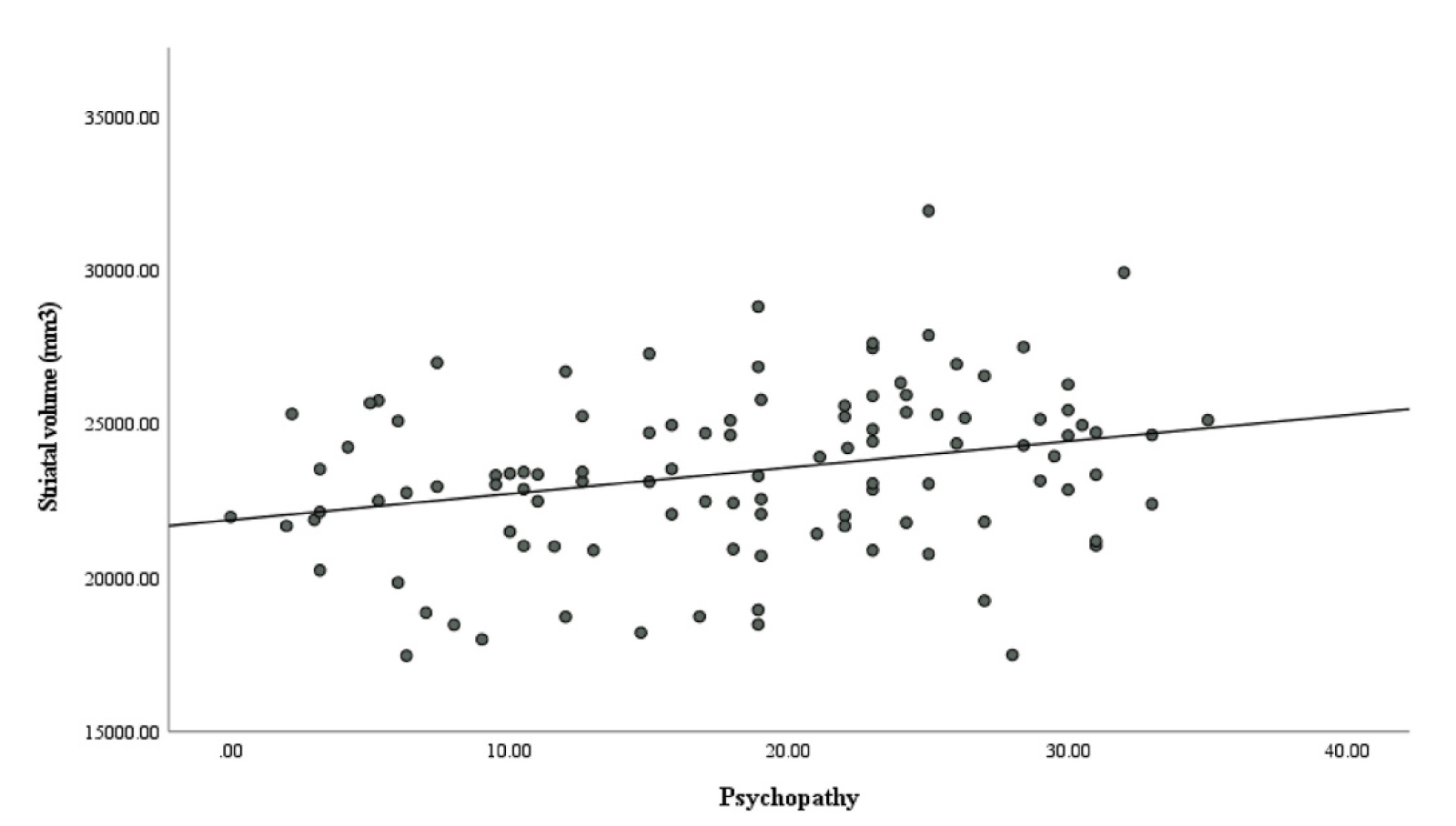
Mark Liberman at Language Log coined the term grouping-think for the tendency to create dichotomous categories where really they aren't so dichotomous. Liberman discusses it with reference to a study on psychopathy with a graph like this:

About it, Liberman writes:

So that press release and its mass-media uptake exemplify a cluster of fallacies that needs a name, and (as far as I know) doesn't have one. The key pieces:

  1. Thinking of distributions as points;
  2. Inventing convenient but unreal taxonomic categories;
  3. Forming stereotypes, especially via confirmation bias.


It is a statistical take on the fallacy of the excluded middle. Andrew Gelman calls it "discrete thinking" and epidemiologist Sander Greenland calls it dichotomania "the compulsion to replace quantities with dichotomies (‘black-and-white thinking’), even when such dichotomization is unnecessary and misleading for inference.”

Liberman has also shared his slides for a talk about mis-use of generic plurals (e.g. psychopaths are ...), related to this post. 

Friday, 2 January 2026

Chinese Janus sentences

  On the ninth day of Antonym Christmas, the Internet gave to me: 

Chinese Janus sentences


I'm learning Mandarin at the moment, and it is full of homonyms, which made me suspect that it would be full of contronyms, aka Janus words, aka auto-antonyms. When I tried looking up 'Chinese contronyms', I found more than Janus words; I found that Victor Mair at Language Log had written about Janus sentences

Here are two Chinese sentences that seriously mess with your mind, since they can also mean the opposite of what they seem to say:

I.

Dōngtiān: néng chuān duōshǎo chuān duōshǎo; xiàtiān: néng chuān duō shǎo chuān duō shǎo.

冬天:能穿多少穿多少;夏天:能穿多少穿多少。

Winter:  wear as much as possible; summer:  wear as little as possible.

II.

Shèngnǚ chǎnshēng de yuányīn yǒu liǎng gè: yī shì shéi dōu kàn bù shàng, èr shì shéi dōu kàn bù shàng.

剩女产生的原因有两个:一是谁都看不上,二是谁都看不上。

Reasons why there are shèngnǚ 剩女 ("unmarried / left behind women; spinsters")*:

1. they look down on everybody
(i.e., they can't stand the sight of anybody; they despise / dislike everybody; they are dissatisfied with everybody; they are not attracted to anyone)

2. everybody looks down on them
(i.e., nobody can stand the sight of them; everybody despises / dislikes them; everybody is dissatisfied with them; nobody is attracted to them)

Do see Mair's original post for more explanation.

I also like this in the Wikipedia article about Homophonic Puns in Standard Chinese:

  • Dream of the Red Chamber – Similar to Dickens or DostoevskyCao Xueqin chose many of the names of his characters in Dream of the Red Chamber to be homophones with other words which hint at their qualities. For example, the name of the main family, "賈" (Jiǎ) puns with "假" meaning "fake" or "false" while the name of the other main family in the story, "甄" (Zhēn) puns with "真" meaning "real" or "true".


Thursday, 1 January 2026

Yesbody

   On the eighth day of Antonym Christmas, the Internet gave to me: 

the opposite of nobody


Arnold Zwicky, on his blog, linguistically and logically takes apart this One Big Happy comic strip:


He does it so well that there's no point in me analy{s/z}ing it here! So please, read his post.


It reminds me of: one day when Grover was very small, she kept asking me "When is yeswember?" It took me a while before I realized she'd heard the word November and was puzzling it out. 

Wednesday, 31 December 2025

Tuesday, 30 December 2025

Inappropriate and in...

On the sixth day of Antonym Christmas, the Internet gave to me:

Morphological negative concord


Mark Liberman at Language Log noticed that an awful lot of people type "inappropriate and inoffensive" when they clearly mean inappropriate and offensive"?  Why is it because we want a negative prefix on what is clearly a negative-feeling word?  (Click on the link for his examples.)

Monday, 29 December 2025

Plutchik's Wheel of Emotions

On the fifth day of Antonym Christmas, the Internet gave to me:
Big feeling wheel!


Rather than alt-texting this complex diagram, I'll encourage you to click on the caption and read the webpage it came from.
Read more about this diagram here.


Goodness, it took me a long time to find a version of this diagram online that spelled ecstasy correctly.

Anyhow, I like thinking about the oppositions here: trust is the opposite of disgust;  annoyance is the opposite of apprehension; serenity is the opposite of pensiveness. Love is the opposite of remorse.


Sunday, 28 December 2025

Not a cat (Blackadder)

On the fourth day of Antonym Christmas, the Internet gave to me: 

a definition starting with D


Blackadder 3.2:  Ink and Incapability

Baldrick's definition of cat: 'not a dog'. 

I particularly like this because my first book has an argument for cat/dog being antonyms (or opposites, depending on your definition of antonym):


For Deese (1965) and many since, antonymy is only indicated if two contrasting items reciprocally trigger each other in word-association tasks. When asked the opposite of peanut butter, American English speakers are likely to say jelly, but when asked the opposite of jelly, they might well say jam. Compare the pair cat/dog, which seems more properly antonymous (in the inclusive sense of the word). While they are each part of a larger contrast set that offers many other potential antonyms, they often co-occur in varying contexts and our conceptual knowledge about their referents allows for a ‘minimal difference’ interpretation under RC-LC. Unlike for gin and tonic, both cat(s) and dog(s) and dog(s) and cat(s) occur regularly in the British National Corpus (forty-two and fifty-six occurrences, respectively). The words also co-occur in a variety of set phrases, as in (3).  (3) raining cats and dogs        fight like cats and dogs        cats and dogs or dogs and cats (= ‘speculative securities’)  And they are replaceable in other phrases and compounds: (4) a cat/dog person dog/cat food The juxtaposition of cat/dog in both fixed expressions and creative language use encourages us to view them as a stored canonical pair rather than as a lexicalized conventional phrase. The fact that the two can be deemed ‘minimally different,’ based on what we know about cats and dogs, encourages us to view them as canonical opposites. They are different in that they have incompatible reference, but similar in that they are basic-level terms for four-legged, furry animals that are commonly kept as house pets and that are tame enough and of an appropriate size to remain uncaged and interact with people. These similarities are what makes dog the more usual opposite for cat than mouse (which differs in size, tameness, pet status), even though cat-mouse are experientially reinforced through their own set of expressions (play cat and mouse with; when the cat’s away, the mouse will play).


Murphy ML. 2003. Semantic Relations and the Lexicon: Antonymy, Synonymy and Other Paradigms. Cambridge University Press.


Saturday, 27 December 2025

Good v evil = bad for crime fiction

On the third day of Antonym Christmas, the Internet gave to me: free fiction help:


Here's a blog post by Louise Harnby on 

Why ‘good’ versus ‘bad’ binaries can harm crime fiction

Friday, 26 December 2025

The opposite of a great truth (Niels Bohr)

On the second day of Antonym Christmas, the Internet gave to me: 

A questionable Niels Bohr quote.


A great truth is a truth whose opposite is also a great truth.

—Niels Bohr

Thursday, 25 December 2025

Left, that's it (Olaf Falafel)

 I've not posted here in a long time, but I have still been collecting things I've meant to post. So, I'm doing The 12 Antonym Blog Posts of Christmas 2025. 


On the first day of Antonym Christmas, my internet gave to me: An Olaf Falafel pun.


Olaf Falafel tweet, 12 Sept 2024:  My wife started teasing me for not knowing my left from right. I said left that's it, , and packed up my things and right her there and then.

Monday, 13 February 2023

More false morphologies

Mo Willems has an opposites book out, Opposites Attract, and the Children's Museum of Pittsburgh has a show about it, which has reminded me that there's an 'antonym blog' folder on my desktop with things I've not been posting here. 

So, for the sake of posting something, here are a couple more takes on a now-familiar kind of cartoon, where a series of letters that looks like a word within a word (but isn't a word within that word) is replaced by an opposite.  I need a name for these, so I can tag them all. Let's call them false-morphologies. Now that I've tagged them, you can find the others here


Wednesday, 22 September 2021

semantic - orthographical ancillary antonymy

 The title of this post will only make sense to the nerdiest antonym nerd, but what's neat about this...


...is the mix of a semantic opposition involving a proper noun's common noun sense, and an orthographic (spelling) opposition. Very cute.

Sunday, 5 September 2021

"Be kind" versus "don't be mean"

I'm thinking a bit about all of the admonitions to "be kind" these days. I'm very much in favo(u)r of kindness, especially in the guises of patience and helpfulness, but I do understand why some people express suspicion of "kindness" as an admonition.

But now I'm thinking about "be kind" versus "don't be mean" and the power of the negative admonition.

When feeding back on others' writing, I often advise them to lead with positive statements rather than negative ones where possible. (I read so many "This study will not study X, but Y." Lead with the Y, please!)  But in this kind of admonition, I think leading with the negative does more. Google's famous(ly abandoned) "don't be evil" feels like a better check on behavio(u)r than "be/do good", for instance. Being good is a tall order. Not everything you do will be good, and that has to be OK. But it's important that what you do isn't evil. It's the line between not-evil and evil that we don't want to cross. Less important is the line between good and not-good.

Self-improvement gurus often push the positive. For instance, for weight loss, they prescribe mantras like  "eat more vegetables" rather than "don't eat sweets". Such cases are different from the good/evil case, though. "Don't eat sweets" tells you not to do something you want to do. "Don't be evil" tells you to not do something you didn't want to do in the first place. It needs to be said not because you would otherwise set out on an evil pathway, but because it keeps you mindful of the potential for evil. It makes you scan your behavio(u)r for inadvertent or coincidental evil. (This might be an argument against The Law of the Ridiculous Reverse.)

I was thinking about this because I chuckled at a Facebook post that implied that people with certain views are stupid, and I've been trying to ask myself "is this kind?" before I do things on the internet. Would it have been kind of me to share that post? No. 
 
But then again, most of the posts I share are not kind. I just shared a picture of a chandelier I liked. Not actually kind. If my intention is to only share kind things on Facebook, then maybe I shouldn't have shared it.

The "don't be mean" admonition allows the sharing of the chandelier, but discourages the sharing of the put-down. It gets down to what's important and therefore is a less boring and more direct question to repeatedly ask myself: is this mean (to/about someone)? So much more satisfying than "is this kind?"

Our university has kindness as one of its corporate values. This means that whenever something I don't like is happening at the university, I annoyingly ask the higher-ups: "How is our value of kindness being practi{c/s}ed here?" 

But what if instead of saying "we will be kind to each other" the university community agreed "we won't be mean to each other"? I have to say, I think I'd have a much easier time knowing if people were acting mean than if they were being kind... 
 

Of course, having indefinable values makes things easier for a corporation, because it's harder to hold them to their values and slogans. This is why Google's "don't be evil" motto was refreshing, and why other corporate entities aren't rushing to imitate it. Their (parent company's) new motto is "Do the right thing"—unhelpfully presupposing that there is exactly one right thing (as opposed to many bad ones?) and thus making it a nearly impossible motto to follow. Which is evil. 
 
But then it's claimed that the problem with the old slogan was that don't be evil means different things to different people. I don't think that matters that much because one doesn't need to please everyone here. Taking "don't be mean" as my motto means that I should not do things that I consider to be mean. If other people consider other things to be mean, then it would be kind to listen to what they have to say about that. But what "don't be mean" means to me is that I should be running my potential behavio(u)rs past my conscience. There's a reason they call the conscience a "little voice". It's easily drowned out. So I have to listen for it. Don't be mean, Lynne. And maybe sometimes you'll be kind. 
 
 
P.S. I've just been reminded of the similar admonition "Don't be a dick". I'm going to stick with "don't be mean" because mean is an adjective and dick is a noun. Nouns are more time-insensitive than adjectives, which means that the barriers to nounhood are higher. To put it as an analogy:
Don't be mean:Don't be a dick::Be kind:Be a saint.
You can be kind without being a saint. Kind is the gateway to sainthood. Similarly, you can be mean without making it to dickhood. So, I could justify some mean behavio(u)r by saying "Well, it's mean, but that doesn't make me a complete dick." My goal is to stay off the path to dickhood entirely, so I'm going to stick with don't be mean.

Tuesday, 2 February 2021

longage and coolth

Antonyms are often (if not usually) uneven. Long and short describe different directions in the same dimension, but we can only (unless we're being a little silly) measure things in length: two feet long, not two feet short. Even if two feet is short, the thing has a length, not a shorth. Because of the way measurement works, it's generally the word that describes the upward direction on the scale that is more 'unmarked', which is to say it can be used in more contexts, like measurements. 

One word that I like a lot, because it seems to go against this trend, is coolth. This is convenient for the particular treatment of gradable adjective meaning that was central to my doctoral work—coolth works better than shorth (semantically speaking) because measurement of temperature and measurement of length work a bit differently. Things can usually get colder (yes, there's an absolute zero, but you'll be dead before you experience it), but once they get too short, they cease to exist.

The word coolth has been around since at least the 1540s, but it probably gets re-invented nearly every time it's used, since no one's hearing it much. It's easy enough to see how to make it. Warmth has given us the recipe.

But anyway, I thought of my love for coolth when I read James Harbeck's blog post about the word longage. It's the opposite of shortage. It doesn't seem to have quite the history that coolth has, but then shortage has only been around since the late 19th century. (Thank you, American English.) And I thought: good for you, short. You got to be the word that did something morphologically interesting and then your opposite copied you. You got to have the kind of 'getting out and about' fun that the unmarked adjective usually gets to have. 

Anyhow, have a read of James's blog post about longage.

And now I find out he's got one about coolth too!

Friday, 22 May 2020

unnegative

One of the Twitter accounts I follow is New New York Times, which automatically tweets words that are published in the NYT for the first time in its history. (Very often, they are typos.) Here's one that caught my eye:


Two of the other Twitter accounts I follow respond to these one-word tweets. One is NYTfirstsaid Context, which gives the context for the tweet, in this case:

[imitating Trump] When it comes to being negative, my test was extremely positive, because, not to be negative, but, being positive would be super negative, and I wouldn’t want to not be unnegative. Of that, I’m positive — in a negative way. — STEPHEN COLBERT
In other words, it's a comedian's imitation of Trump's claim that he "tested positively toward the negative" for coronavirus. This is a man whose ego is so fragile (and intellect so limited) that he doesn't want to classify himself as anything negative, even when it's a good thing to be negative.

The last post here was about unalive versus alive and dead, where something unalive isn't necessarily something that's dead because in order to be dead you have to have been alive, whereas in order to be unalive (in the sense used in the cartoon), you presumably don't. You can be in the class of things that are not alive.

But is unnegative anything other than positive? And is the opposition, like dead/alive, restricted to a particular domain? Various things could be positive or negative, but when we shift from one semantic domain to another, things seem to change.

When positive/negative are applied to numbers, there's a middle ground between them: zero.

-5   -4   -3   -2   -1   0   +1   +2    +3  +4   +5

Here unnegative would presumably refer to the numbers {0, 1, 2, 3...}, unlike positive, which refers to {1, 2, 3...}. We could call negative/unnegative a privative relation, where unnegative just means the absence of negativity. It works as a contradictory antonym (if a number is not negative, it's unnegative and vice versa), where positive/negative doesn't quite (because of zero).

I think we'd have to call this type a non-gradable contrary antonym pair. Contraries have a middle ground (can be neither X nor Y), but they are usually properties that exist to greater or lesser extents (gradable). You can be neither tall nor short because you can be an unremarkable height, but even if you're short, you can be taller than someone else. But +3 is not "more positive" than +1. It's more than +1, but not more positive than this. The thing is, the way many people talk about contraries, you'd think they were always gradable, so it's a bit funny to talk about non-gradable contraries. (John Lyons talks about non-gradable contraries with respect to directional opposites. And indeed this seems to be a kind of directional opposite.)

In the context of medical tests, there seem also to be three possibilities (putting aside the possibility of not taking the test): positive, negative, and inconclusive. An inconclusive result for a test could be classed as an unnegative result, so in that case unnegative ≠ positive.

But "inconclusive" is not really a middle ground, and it's not the same as the reality of whether one has the disease, it's "We don't know". In terms of who has a disease or not, positive/negative is complementary: you either have the virus or you don't. It's yes or no with no maybe

The last of the NYT-neologism Twitter feeds I follow is called NYT Bibliography and it documents how many times the new-to-the-NYT word has occurred in Google Books. There was no such tweet-response yet, and so I looked for myself and found...


...nothing. I was really quite surprised. I checked for it with a hyphen (un-negative), just in case and got none that way either.  Congratulations to Stephen Colbert for not only getting the word into the NYT, but for being so original.

Googling the word more generally brings up more hits, many of which are hyphenated. They mostly relate to the semantic domain of emotional states.  There's even an @unnegative Twitter feed, and I found its profile description interesting:
I was kind of hoping that the un- in this un-negative would be the verb prefix, which means 'reversal' rather than 'not'. (When you untie your shoes, you don't not-tie them.) I had hoped this person was going to unnegative the news for us. But they're definitely using it as an adjective, and they have excluded the middle between positive and negative: unnegative news is positive news. No neutral news here. 

Anyhow, that's a smidgen of what goes through my head when a one-word tweet comes into view.